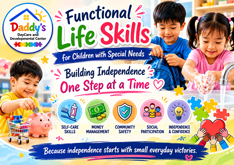

Every child deserves the opportunity to grow into a confident, capable, and independent individual. For children with special needs, learning functional life skills plays a huge role in helping them navigate everyday life with greater confidence and success.
Functional life skills are practical skills that children use daily at home, in school, and within the community. These skills may seem simple to others, but for children with developmental delays, Autism, ADHD, or other learning differences, they often require intentional teaching, patience, and consistent practice.
At Daddy’s DayCare and Developmental Center, we believe that every small achievement matters. Teaching life skills is not just about completing tasks — it is about empowering children to become more independent, safe, and confident in their own abilities.
Why Functional Life Skills Matter
Children with special needs often benefit from structured and repetitive learning experiences. Functional life skills help them:
Develop independence
Improve self-confidence
Increase social participation
Enhance safety awareness
Prepare for future school and community involvement
Reduce anxiety during daily routines
These skills also help families create smoother routines at home and encourage children to actively participate in everyday activities.
- Self-Care Skills
Self-care is one of the first and most important areas of functional learning. These are the everyday routines that help children care for themselves and build personal responsibility.
Examples of Self-Care Skills:
Brushing teeth
Washing hands properly
Bathing and grooming
Dressing independently
Using the toilet appropriately
Recognizing personal boundaries and privacy
For children with special needs, self-care tasks may need to be broken down into smaller, manageable steps. Visual schedules, modeling, repetition, and positive reinforcement can make learning easier and more enjoyable.
Tips for Parents:
Use picture guides or step-by-step charts
Practice routines at the same time daily
Celebrate small improvements
Allow extra time for independence
Remember, progress may be slow, but consistency creates growth.
- Money Management Skills
Teaching children basic money concepts helps prepare them for real-life situations and future independence.
Skills Children Can Learn:
Identifying coins and bills
Understanding the value of money
Recognizing price tags
Practicing simple buying and purchasing
Learning how to ask for help in stores
Hands-on learning works best. Pretend play stores, toy cash registers, and supervised shopping trips are excellent ways to practice money skills in a fun and stress-free environment.
Why It Matters:
Money management teaches more than math. It also develops:
Decision-making
Communication skills
Problem-solving
Social interaction
Even simple tasks like handing payment to a cashier can build confidence and independence.
- Community Safety Skills
Safety skills are essential for every child, especially for children with special needs who may struggle with communication, awareness, or impulse control.
Important Community Safety Skills:
Memorizing emergency contact information
Learning safe street-crossing rules
Identifying trusted adults and community helpers
Understanding “safe” versus “unsafe” situations
Knowing what to do when lost
Children should also learn to recognize important community helpers such as:
Police officers
Firefighters
Doctors and nurses
Teachers and security guards
Role-playing activities and community exposure can help children practice these skills in realistic ways.
Learning Through Patience and Play
Children with special needs learn best when lessons are engaging, supportive, and meaningful. Functional life skills do not need to feel like formal lessons all the time. Many skills can be taught naturally through:
Play-based activities
Daily routines
Community outings
Household participation
Positive social interactions
The goal is not perfection — the goal is progress.
Every Child Can Learn
Every child develops at their own pace. Some children may master skills quickly, while others need more guidance and repetition. What matters most is creating a loving, supportive environment where children feel encouraged to try.
At Daddy's DayCare and Developmental Center, we believe that every step forward is worth celebrating. By teaching functional life skills with patience, compassion, and understanding, we help children with special needs become more confident, capable, and ready to shine in their own unique way.
Because independence starts with small everyday victories. 🌈